How Thick Can Laser Cutting Go? Thickness Guide by Material
The material thickness that can be laser cut depends mainly on machine power and material type. This is usually the first question customers ask before sending a drawing, since it determines which machine is suitable and how long fabrication will take.
This article summarizes the cutting thickness limits of the 3kW and 6kW fiber laser machines operating at the Kim Phat workshop, for steel sheet and stainless steel.
The higher the machine power, the greater the material thickness that can be cut, but the optimal thickness for speed and edge quality is always lower than the maximum cutting limit.
— Laser CNC Kim Phat
Cutting thickness limits by machine and material
The figures below apply to the fiber laser machines currently operating at the Kim Phat workshop:
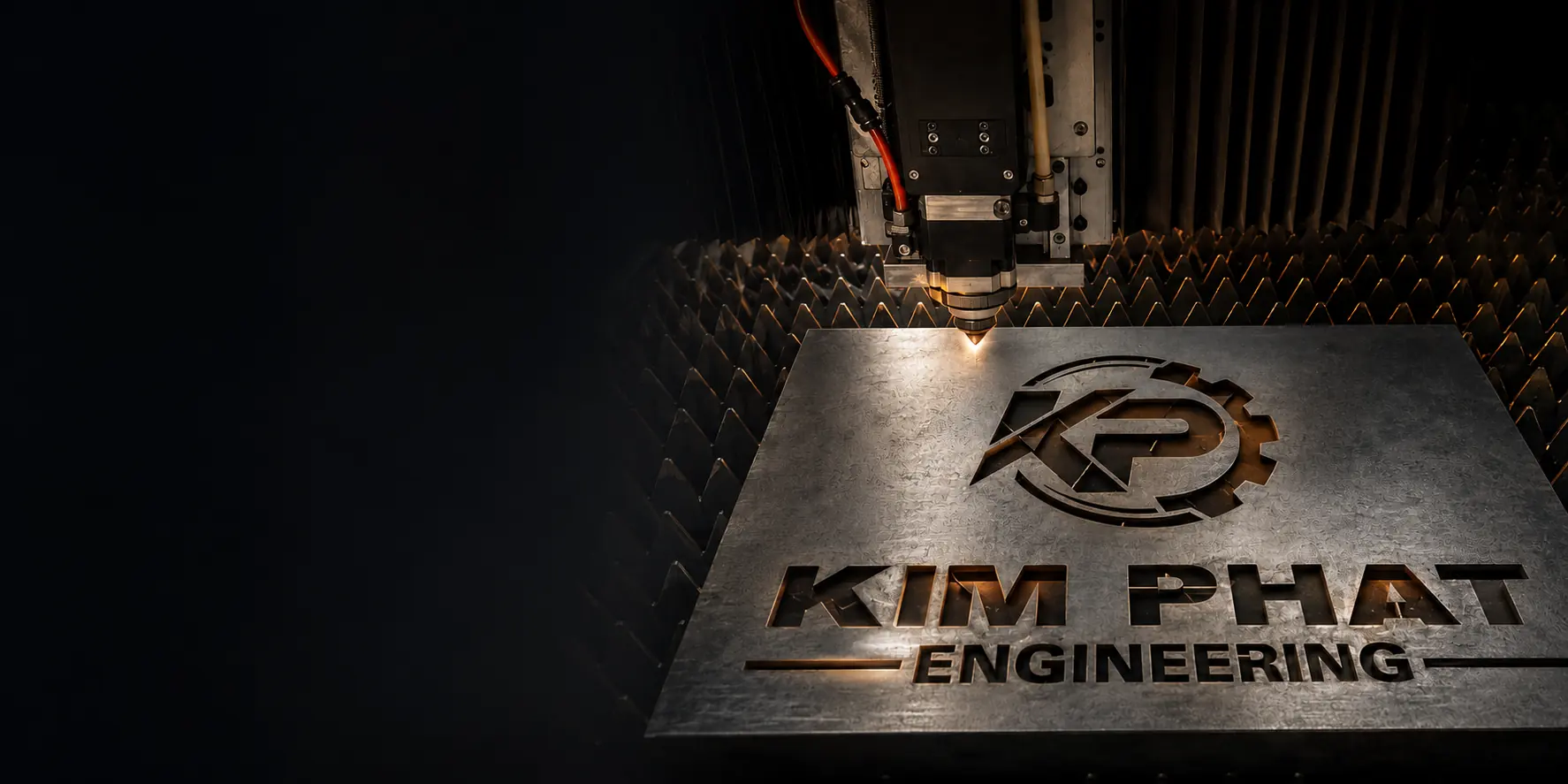
- 3kW fiber laser (2 machines, 3,000 x 1,500mm bed): carbon steel under 20mm, stainless steel under 10mm
- 6kW fiber laser (1 machine, 6,000 x 1,500mm bed): carbon steel under 30mm, stainless steel under 12mm
- The optimal thickness for speed and edge quality is usually lower than the maximum limit
- Actual cutting capability also depends on the profile and complexity of the part
Why carbon steel cuts thicker than stainless steel on the same machine
Stainless steel has different thermal reflectivity and metallurgical properties than carbon steel, requiring higher energy density to cut through the same thickness, and it is also more prone to edge discoloration if settings are not correct. As a result, the cutting thickness limit for stainless steel on the same machine is usually lower than for carbon steel.
Choosing the right machine for your part thickness
For thin to medium steel sheet or stainless steel parts, the 3kW fiber machine handles most needs well at fast cutting speed. For thicker parts or sizes larger than 3,000 x 1,500mm, the 6kW fiber machine with a 6,000 x 1,500mm bed is the suitable choice, cutting carbon steel up to under 30mm.
How to confirm cutting capability for a specific part
Since cutting capability also depends on the profile, density of small holes and tolerance requirements of each part, the most accurate way is to send a CAD/DXF file along with the specific material and thickness so the workshop can confirm fabrication capability before quoting.
Conclusion
Maximum laser cutting thickness depends on machine power and material type, with the 3kW and 6kW fiber laser machines at Kim Phat meeting most needs for cutting steel sheet and stainless steel in mechanical fabrication and decorative metalwork.
Frequently asked questions about laser cutting thickness
How thick can the 3kW fiber laser machines at Kim Phat cut?
The two 3kW fiber laser machines (3,000 x 1,500mm bed) at the workshop cut carbon steel under 20mm and stainless steel under 10mm.
How thick can the 6kW fiber laser machine at Kim Phat cut?
The 6kW fiber laser machine (6,000 x 1,500mm bed) cuts carbon steel under 30mm and stainless steel under 12mm.
Why does stainless steel cut thinner than carbon steel on the same machine?
Stainless steel has different thermal reflectivity and metallurgical properties than carbon steel, requiring higher energy density to cut through the same thickness, and it is also more prone to edge discoloration if settings are not correct, so its cutting thickness limit on the same machine is usually lower than carbon steel.
How can I know for sure whether the machine can cut my specific part?
Since cutting capability also depends on the profile, density of small holes and tolerance requirements of each part, the most accurate way is to send a CAD/DXF file along with the specific material and thickness so the workshop can confirm fabrication capability before quoting.